
Finding a good smartphone under ₹20,000 in 2026 isn’t as straightforward as it used to be. Gone are the days when you could expect better hardware, capable cameras, and an overall well-rounded smartphone at this price point. The new reality in 2026, and possibly going into 2027, is that the sub-₹20K segment has lost much of what once made it attractive.
Although there are still plenty of options in this price range, not every phone offers a well-rounded experience or justifies its price.
Before, it was fairly common to find smartphones under ₹20,000 with an FHD+ display, dual cameras, a capable processor, and even 8GB of RAM. Today, however, we’re increasingly seeing phones with HD+ displays (essentially a slightly improved 720p panel), a single rear camera, no ultrawide camera, just 4GB or 6GB of RAM, and processors that can leave quite a bit to be desired.
But for this guide, I’ve put together some decent smartphones under ₹20,000 that are still worth considering. These aren’t necessarily the most powerful or the best camera phones in the segment, but they offer a good balance of performance, display quality, cameras, battery life, software, and other useful features for their price.
So, if you’re looking for a new smartphone without spending more than ₹20,000, here are some options worth taking a look at.
But keep your expectations in check. If the current trend continues, you may not find many phones offering what we traditionally considered “mid-range” specifications at this price point in 2027. In my view, the ₹20,000 segment is increasingly becoming a budget-phone category. If you want a more genuinely mid-range experience, you will need to increase your budget to around ₹30,000.
Selection Criteria:
- Focused on smartphones launched in 2025 and later.
- A good-quality FHD+ display was the baseline for display quality.
- Avoided phones with relatively weak processors for this price range.
- Prioritised phones with at least 6GB of RAM.
- Focus was also placed on practical features such as NFC support, IR Blaster, an IP rating, a useful secondary ultrawide camera, and fast charging.
- Finally, smartphones needed to offer at least 2 years of Android OS updates.
Note: The smartphones listed below are not ranked in any particular order. The buy links provided will direct you to authorized sellers.
1. Motorola G67 Power
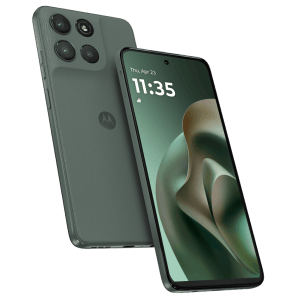
 | IPS LCD, 120Hz |
 | Snapdragon 7s Gen 2 (4 nm) 8/128GB |
 | 50 MP, f/1.8 (wide) 8 MP, f/2.2 (ultrawide) |
 | 7000 mAh 30W wired |
The Moto G67 Power might be the only smartphone on this list with a genuinely capable processor. At the moment, however, the phone is overpriced. If you can find it for under ₹20,000 — not a rupee more — it’s worth considering.
Starting with the positives, the Moto G67 Power comes with a 120Hz FHD+ display protected by Corning Gorilla Glass 7i. It also has stereo speakers and a very large battery that should comfortably last you through a full day of use.
The 50MP primary camera doesn’t have OIS, but it can still capture good photos during the day. Low-light photography is a different story, as the camera does struggle a bit at night. However, this is one of the few phones on this list that offers a proper dual-camera setup, with an 8MP ultrawide camera instead of a largely useless macro or depth sensor. You also get 4K video recording, which is a nice bonus at this price.
The phone also carries an IP64 rating, giving it some protection against dust and water splashes.
The biggest downside, apart from the lack of OIS, is its software support. Motorola promises only one Android OS update, taking the phone to Android 16. That said, the hardware should still be capable of handling everyday apps for several years, and the phone could potentially remain usable for around five years before app compatibility becomes a significant concern.
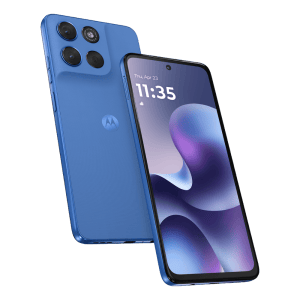
2. Motorola G57 Power
| IPS LCD, 120Hz |
| Snapdragon 6s Gen 4 (4 nm) 8/128GB |
| 50 MP, f/1.8 (wide) 8 MP, f/2.2 (ultrawide) |
| 7000 mAh 33W wired |
The Moto G57 Power, much like the G67 Power, offers a similar overall package, but with a different processor. The G57 Power once held the crown as one of the best phones under ₹15,000, but its price has now increased by around ₹4,000–₹5,000. Even so, if you can find it for around ₹19,000–₹20,000, it wouldn’t be a terrible deal.
The phone comes with an FHD+ display protected by Corning Gorilla Glass 7i. The cameras are similar to those on the G67 Power and can take some genuinely good photos during the day. However, the cameras do struggle quite a bit at night. And unlike the G67 Power, the G57 Power doesn’t support 4K video recording. Video recording tops out at 2K at 30fps.
The phone also has stereo speakers and has an IP64 rating, which means it can handle occasional water splashes. And, like most G-series Motorola phones, the G57 Power is only promised one Android OS update, with Android 17 being its final major OS update.
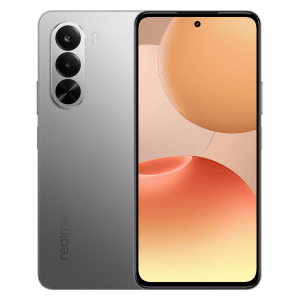
3. Realme P4x
| IPS LCD, 144Hz |
| MT Dimensity 7400 Ultra (4 nm) 6/128GB, UFS 3.1 |
| 50 MP, f/1.8 (wide) |
| 7000 mAh 45W wired |
The Realme P4x used to be one of the most ideal smartphones you could get under ₹16,000, but as you know, the recent price hikes have taken a significant hit on its overall value. That said, the phone is still quite capable and deserves a place on this list.
It comes with a good 144Hz display, which is one of its standout features, along with a decent primary camera that produces photos with good colours. You also get stereo speakers and an IP64 rating.
And unlike the G-series Motorola phones, Realme promises two Android OS updates, with Android 17 being the final major OS version for the phone.
4. Lava Virat Curve

| AMOLED, 120Hz |
| MT Dimensity 7100 (6 nm) 6/128GB, UFS 2.2 |
| 50 MP (wide) |
| 6000 mAh 45W wired |
Reviews for the Lava Virat Curve are yet to be published, so it’s too early to give a definitive verdict on the phone. However, based on its specifications and initial impressions, it does seem like a very interesting option around the ₹20,000–₹22,000 price range.
Unlike most of the phones on this list, the Virat Curve comes with a FHD+ AMOLED curved display with a 120Hz refresh rate. The phone also has a stylish and relatively premium-looking design, and also comes with an IP64 rating.
As for the cameras and performance, it’s too early to comment on their real-world performance since proper reviews aren’t available yet. I’ll update this section once reviews are published.
One thing worth pointing out, however, is the software support. Lava promises two years of Android OS updates, which means Android 18 should be the phone’s final major Android update.
For now, I’d consider the Virat Curve a promising option rather than a confirmed recommendation. Its display and design certainly make it interesting, but the camera performance and overall experience need to be evaluated through proper reviews before making a final judgement.
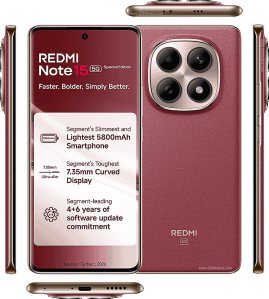
5. Redmi Note 15 Special
| AMOLED, 120Hz |
| Snapdragon 6 Gen 3 (4 nm) 6/128GB, UFS 2.2 |
| 50 MP, f/1.8, (wide) |
| 5800 mAh 45W wired |
If you can find the Redmi Note 15 Special for under ₹20,000, it’s a decent option worth considering.
It comes with a good-quality FHD+ curved AMOLED display with a 120Hz refresh rate and stereo speakers. The processor is also fairly well-balanced for the price, and it should handle everyday tasks without any major hiccups.
For cameras, you get a single 50MP primary camera that can capture decent photos. Video recording is supported at up to 4K 30fps, which is a nice feature to have at this price. However, as with most of the phones in this price segment, you need to keep your expectations in check when it comes to the cameras.
The phone comes with an IP66 rating and Xiaomi promises an impressive four major Android OS updates, with Android 19 being its final major Android version.
Honorable Mentions:
1. Samsung Galaxy M36 / F36
The Samsung Galaxy M36/F36 is a decent option, especially since you can find it offline as well. It is one of the few phones in this price range to offer a 120Hz FHD+ Super AMOLED display with Corning Gorilla Glass Victus+, a triple-camera setup, and an impressive six major Android OS updates.
2. Redmi 15
The Redmi 15 is worth considering if you can still find it at an e-commerce or offline retailer. It was originally launched as a budget phone, so its processor may feel underwhelming, but it should handle everyday tasks reasonably well. You also get a 144Hz FHD+ IPS display and a massive 7,000mAh battery.
3. Infinix Hot 70 Pro
The Infinix Hot 70 Pro has a reasonably well-rounded specification sheet by 2026 standards. Most of its hardware is fairly average, though, so I’d consider it only if the options above aren’t available — and only if you can find it under ₹20,000.
4. Samsung Galaxy F17
The Galaxy F17 is another decent budget option if you can find one. It was technically launched as a sub-₹13,000 smartphone, but price hikes have pushed it as high as ₹19,000. At that price, I’d consider it only if the other options mentioned above aren’t available.




Leave a Reply